
Most people think rodent control means traps. Traps are only half the job, and the half that does not last. Trapping removes the animals that are already inside. Exclusion is what keeps the next ones out. In Issaquah, where the forest runs right up to the houses, exclusion is the step that decides whether the problem comes back next fall.
What Exclusion Actually Means
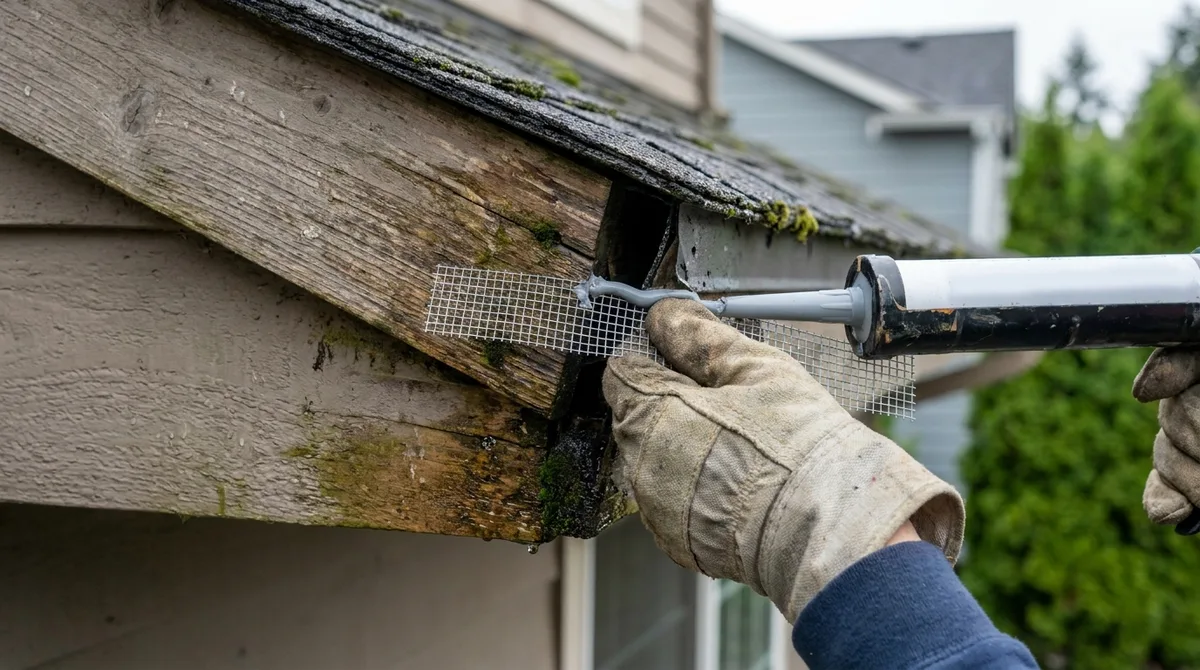
Exclusion is the sealing of every gap a rodent can use to get into your home. The rule our technicians work to is simple: any gap a quarter inch and wider gets sealed. A rat can squeeze through a gap the size of a coin; a mouse can fit through a gap the size of a pencil. That is why a quick look around the outside of the house is never enough. The gaps that matter are often the ones you would walk past without noticing.
Exclusion is not a spray, and it is not a one-time treatment. It is physical work: finding the gaps, then closing them with materials a rodent cannot chew through.
The Gaps We Seal First in Issaquah
Issaquah homes have the same weak points again and again, because of how they are built and where they sit. The roofline is first: gaps where the roof meets the wall, roof returns, and the edges of gable vents. Then the places where pipes and wires enter the house: utility penetrations, vents, and the gaps around air-conditioning lines. Then the foundation: vents, cracks, and the gaps where the foundation meets the siding.
Two more are easy to miss. Deck ledgers, where a deck is fixed to the house, leave a long, sheltered gap that rats use as a highway. And the uphill side of a hillside home, common in Talus, Squak Mountain and the Highlands, where the ground meets the house higher than you expect and the gaps sit above eye level.
What We Seal Them With
Foam and caulk alone do not hold. A rat will chew straight through them. We seal with steel mesh, sheet metal, mortar and copper mesh, matched to the gap: mesh for vents and larger openings, sheet metal for flat gaps along the roofline and foundation, mortar for cracks in masonry, copper mesh for the small, irregular gaps around pipes. Each seal is fixed in place so it cannot be pushed out from either side.
Door sweeps and weather stripping are part of the same job. A gap under a garage door or a side door is an open invitation, and it is one of the most common entry points we find in Issaquah garages.
Trapping First, Sealing Second, Always in That Order
The order matters. If you seal a house with animals still inside, they die in the walls, and then you have a smell problem on top of a rodent problem. So the job runs in order: inspect the whole house, trap and remove the animals inside, then seal the entry points, then clean up the droppings and damaged insulation. Tamper-resistant bait stations go outside, where they intercept animals before they reach the house; snap traps go inside, where the animals already are.
That is the same flow whether the animal is a roof rat, a Norway rat or a mouse. What changes is where the traps go and which gaps matter most, as we explain in our guide to rats vs mice in Issaquah.
What Happens After the Sealing
After the work, our technician walks the house with you and shows you what was sealed and where. Then the follow-up matters: new gaps appear as a house settles, as wood shrinks in summer, and as storms loosen flashing. That is why we recommend a check each fall, before the rain and the cold push rodents indoors. The indoor peak in Issaquah runs from October into February.
Between visits, three habits help most: store food in sealed containers, clear clutter from the garage and crawl space, and trim any branch that touches the roof. A branch touching the roof is a bridge, and roof rats use it every night.
What Exclusion Does Not Do
Exclusion keeps rodents out. It does not undo the damage they already did. Droppings, urine-soaked insulation, gnawed wiring and contaminated stored food still need cleaning up. That is the attic and crawl space cleanup step, done after the animals are out and the gaps are sealed. And exclusion does not help if the animals are still inside, which is why the inspection comes first. If you have already seen the signs of rats in your home, call us before you seal anything.