
A Thorough Inspection First
We walk the whole house, inside and out, and photograph every gap. Nothing is sealed blind, and nothing is missed.
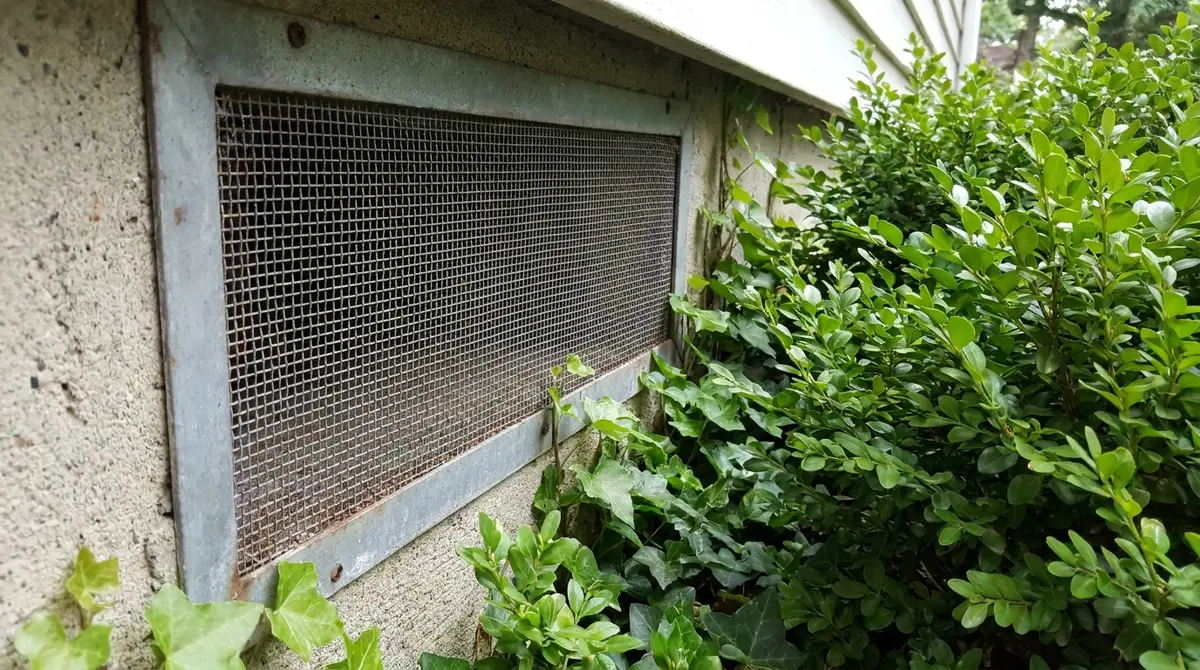
We walk the attic, crawl space and roofline, find every gap a rodent could use, then seal it with steel mesh, sheet metal or mortar, so the rodents stay out. We serve homes across Issaquah, in ZIP codes 98027 and 98029. Call us and tell us what you have seen.
Issaquah homes sit at the forest edge, between Cougar, Squak and Tiger Mountains, and forest-edge homes have more entry points than homes in open ground. Roof returns, gable vents, deck ledgers, utility penetrations, weep holes, foundation gaps: a rodent needs only a quarter inch to get in, and an Issaquah home has more places to look than most. That is why exclusion, sealing the gaps, is the core of rodent control, not an add-on.
Trapping removes the animals that are already inside. Exclusion is what keeps the next ones out. Without it, new rodents follow the same scent trails through the same holes, and the job repeats every season. That is why every trapping job we do ends with sealing, and why an inspection is the first step of every job. That is what local rodent control in Issaquah means to us: find the gaps, seal the gaps, then trap.
Fall is sealing season in Issaquah. The rain pushes rodents indoors, and indoor calls peak from October to February, so the gaps found in the fall are the ones that matter most. An inspection in the fall, before the peak, is the best time to seal a home. The sections below explain what the inspection covers, how we find the gaps, and where they are.
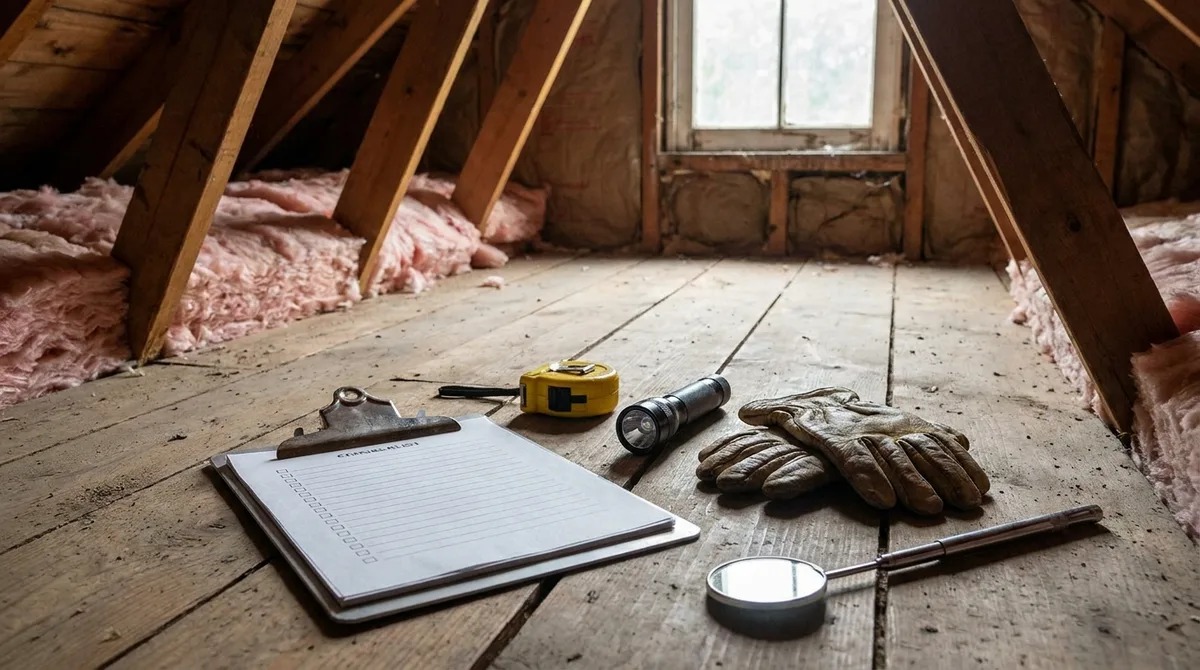
An inspection is a full walk of the house, inside and out, looking for the animals, the damage and the gaps. This is what our technicians check, and what you get in the photo report.
You get the photo report and a plain-language plan before any work starts, so you know what will be sealed and what it will take.
Gaps are not always obvious. A cracked vent cover, a loose fascia board, a gap around a pipe: these are easy to walk past. This is how our technicians find them:
Every gap we find is photographed and marked on the plan, so nothing is missed and nothing is sealed twice. See rodent trapping and removal for what happens when animals are already inside.
Forest-edge homes have more entry points than homes in open ground, and Issaquah has a lot of them. A rat needs a gap only half an inch wide to get through, and a mouse needs only a quarter inch. These are the gaps our technicians find most often on an inspection:
Fall is sealing season in Issaquah. The rain pushes rodents indoors, and indoor calls peak from October to February, so the gaps found in the fall are the ones that matter most. Sealing them before the peak is what keeps a one-off visit from becoming a yearly problem. Recurring prevention and maintenance re-checks the seals every season, so new gaps are caught before rodents find them.
The attic, crawl space, garage and roofline are walked, droppings and nesting material are found, and every entry point is photographed for the report.
You get a photo report of what was found and a plain-language plan: what will be sealed, what it will take, and what happens next.
Gaps are sealed with steel mesh, sheet metal, mortar or copper mesh, door sweeps are fitted, and vents are screened. No foam or plastic mesh that rodents chew through.
The seals are looked at again to confirm the fix is holding and no new activity has started.
Day ranges are typical for a light infestation; a home with many gaps can take longer, and the inspection will tell you. Our own technicians do the work, and explain the plan in plain language before we begin.
Exclusion is not one material. It is the right material in the right place, and the wrong material in the wrong place is what fails. This is what we use:
What entry points look like on day one, and what is different when the job is done, in three places rodents get in most often.
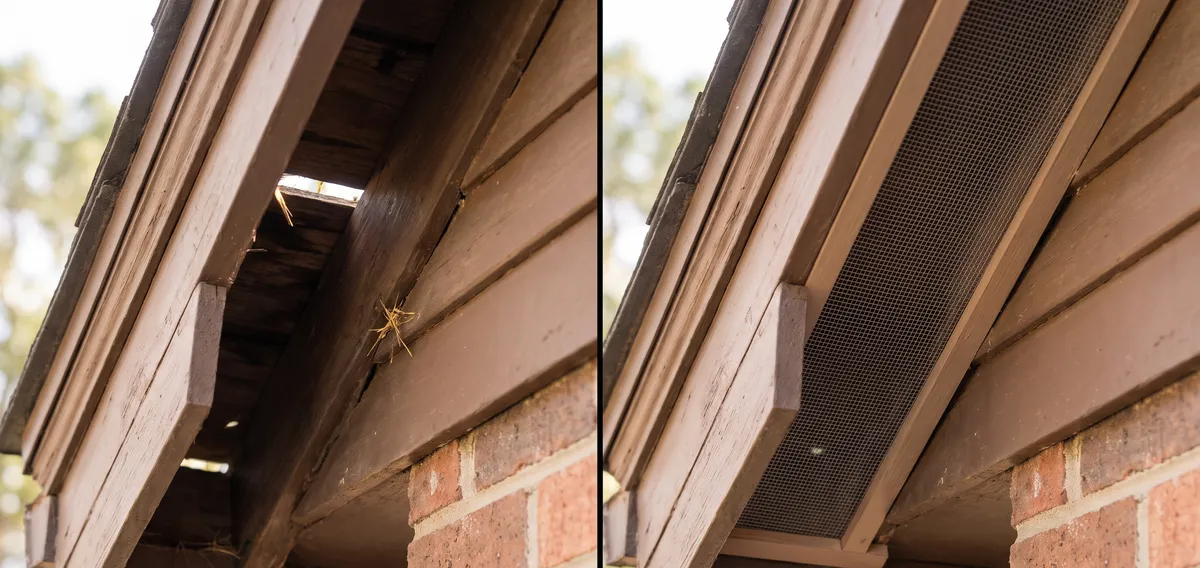 Before
After
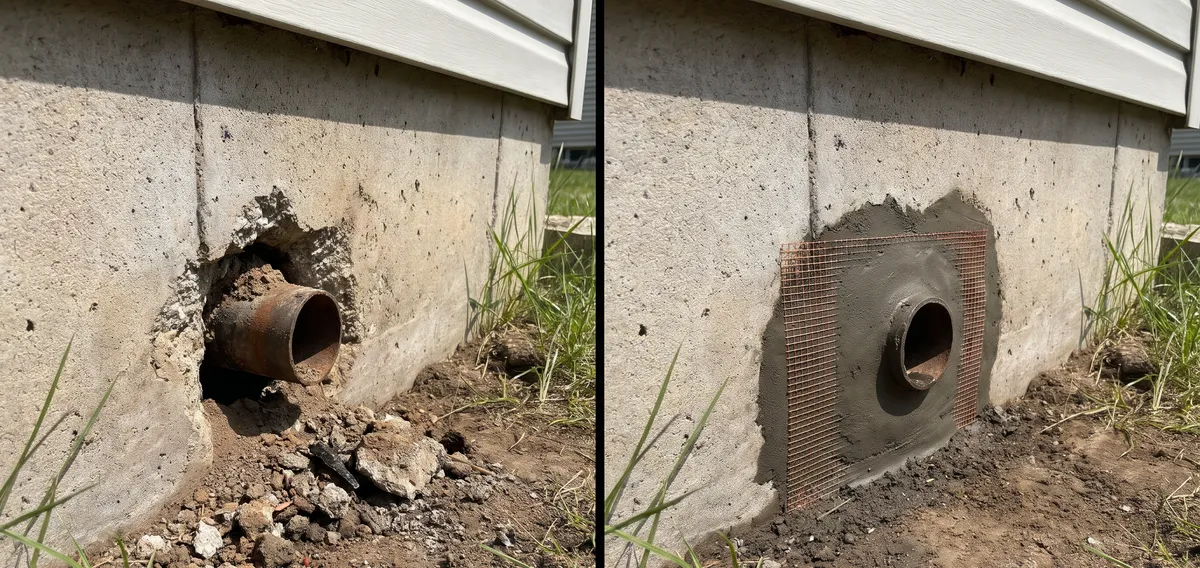 Before
After
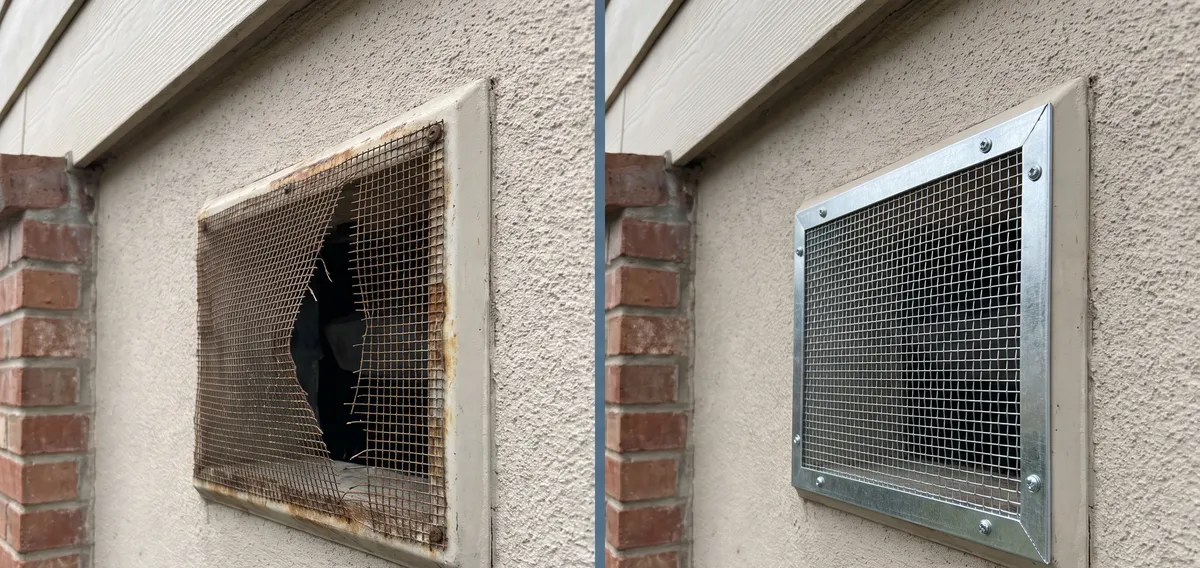 Before
After
These pairs show the kind of change an inspection and exclusion visit makes. They are illustrative images, not photos of one single job: every home’s before and after looks different. The full job is attic and crawl space cleanup after trapping and removal.
Sealing is the part of rodent control that lasts. It takes a thorough inspection, the right materials, and sealing that holds. That is what our rodent-only team does, and it is why Issaquah homeowners call us first.
We walk the whole house, inside and out, and photograph every gap. Nothing is sealed blind, and nothing is missed.
Steel mesh, sheet metal, mortar and copper mesh. Never foam or plastic, so a rodent cannot chew its way back in.
Roof rats climb, so we check the roofline, the vents and the eaves, not just the ground floor. The whole house is sealed, top to bottom.
You get a photo report of what we found and a plain plan of what will be sealed. No vague promises, no jargon.
We work only in Issaquah. We know the roof returns in the Highlands, the deck ledgers in Talus, and the foundation gaps in the older homes downtown.
We come back on Day 14 to check the seals. If they hold and no new activity has started, the job is done.
An inspection is worth booking any time, but these three are the moments when it matters most. If any of these fits your home, call now and tell us.
The rain pushes rodents indoors from October to February. An inspection in the fall seals the gaps before the peak, so the animals never get in.
Trapping removes the animals inside, but new ones follow the same scent trails through the same holes. An inspection finds every gap, so the trapping holds.
Droppings, gnaw marks or scratching at night mean rodents are already in. An inspection finds where they are and where they got in, so the fix covers both.
If you have seen signs and need animals removed first, see rodent trapping and removal for what happens before the sealing.
Sealing fixes the gaps you have now. These four habits keep new gaps from opening and new rodents from moving in after we leave. Do them, and the next rodent has nowhere to go.
Inspection and exclusion rarely stands alone. These are the services that usually go with it, on the same job or straight after.
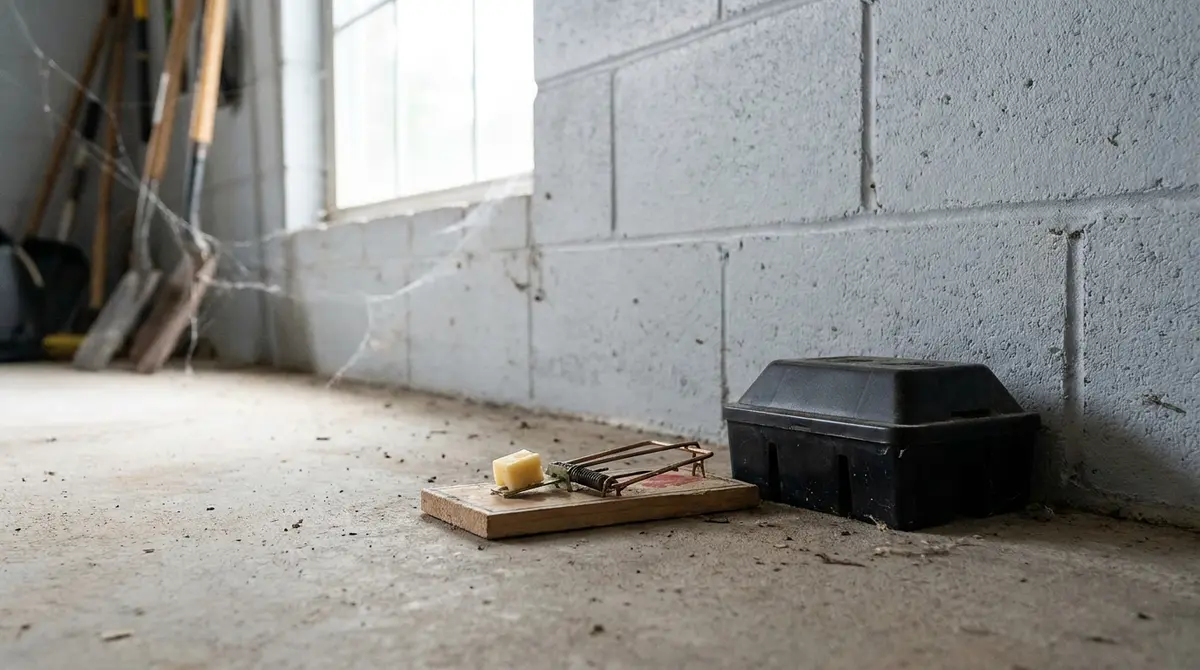
Snap and live traps on the animals' routes, plus bait stations outside.
View Details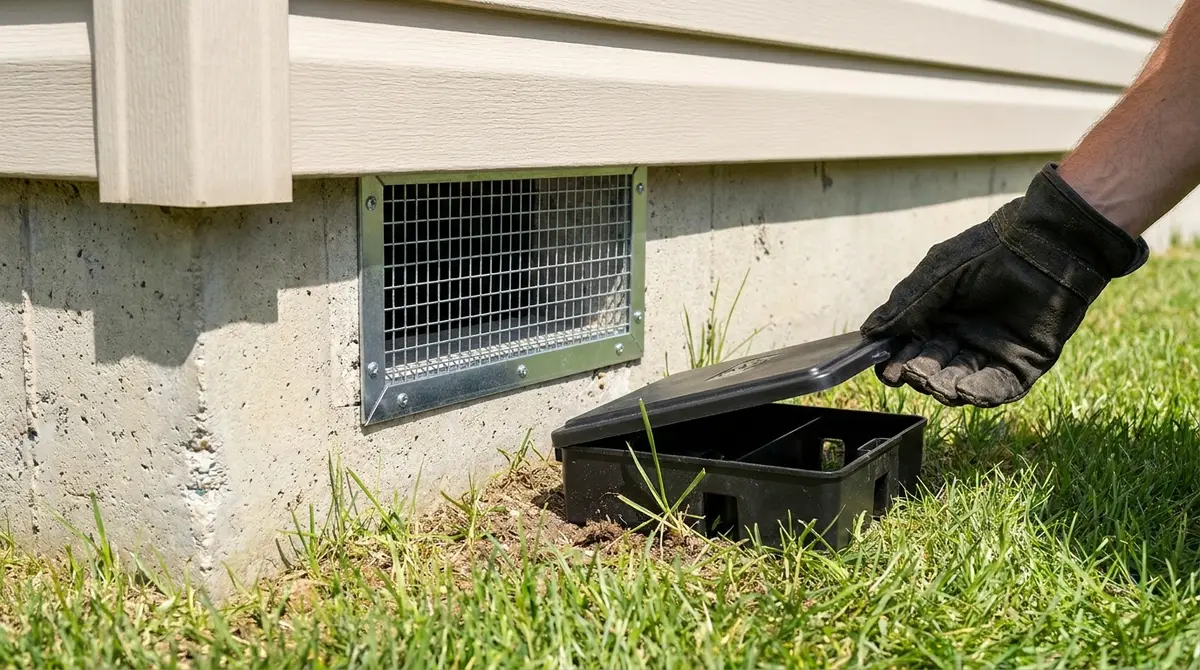
Seasonal checks that catch new gaps and early activity before an infestation.
View Details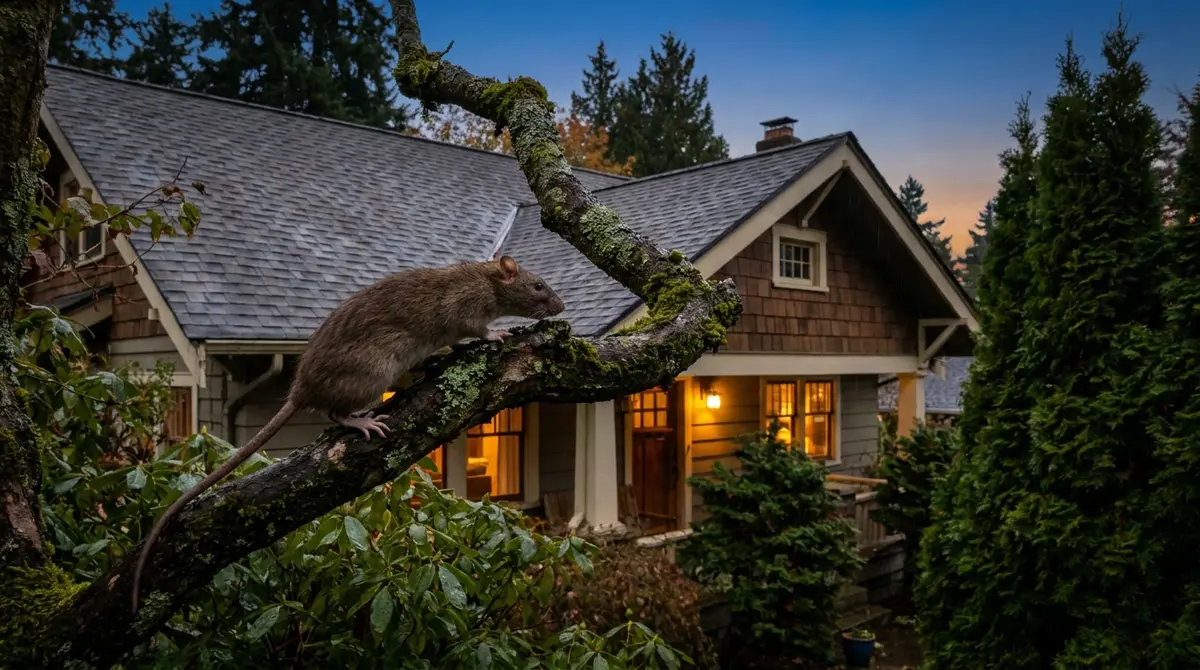
Roof rats and Norway rats trapped, removed and sealed out.
View DetailsThree guides that go deeper on the signs, the species, and the sealing. Read them before you call, or after, so you know what to look for.
What sealing means, the gaps we seal first, and what it does not do.
Read the Guide →Six signs to check, from droppings to scratching at night.
Read the Guide →Size, droppings, sounds and nests, so you know which animal it is.
Read the Guide →A full walk of the attic, crawl space, garage and roofline, inside and out. We look for droppings, nesting material, gnaw marks and grease trails, and we find every gap a rodent could use, from roof vents to foundation cracks. You get a photo report of what was found and a plain-language plan for sealing it.
A quarter inch, about the width of a pencil. A rat needs a gap about half an inch wide. That is why an inspection looks for gaps you would walk past: a cracked vent cover, a loose fascia board, a gap around a pipe. If a pencil fits, a mouse fits.
The sealing itself is a one-time job, but a house is not sealed forever. New gaps appear as wood shrinks, vents wear and rooflines age, and a new gap is a new entry point. That is why we check the seals again on a follow-up visit, and why a recurring prevention plan re-checks them every season.
Yes. Roof rats climb, so the roofline is one of the first places we check: roof vents, gable vents, eaves, fascia boards and roof returns. Gaps there are sealed with steel mesh, sheet metal or mortar, the same materials we use at ground level. Tree limbs touching the roof are a bridge into the attic, so we will point those out too.
The materials we use, steel mesh, sheet metal, mortar and copper mesh, last for years, because rodents cannot chew through them. What changes over time is the house: wood shrinks, vents wear, new gaps open. A follow-up check confirms the seals are holding, and a seasonal re-check catches any new gaps before rodents find them.
Rodent inspection and exclusion is available across Issaquah, in Issaquah Highlands, Talus, Downtown Issaquah, Squak Mountain, Providence Point, South Lake Sammamish, Montreux and North Issaquah / Gilman. See all rodent control service areas in Issaquah.
“They spent an hour checking the whole house, roof to crawl space, and showed us every gap on a written list. We knew exactly what we were paying for.”
Rachel H.Issaquah Highlands
“The inspection found gaps we never would have seen, around the pipes and under the eaves. They sealed them all with steel mesh. Nothing has got in since.”
Tom G.Talus
“We bought an older house and wanted it checked before winter. The inspection was thorough, the report was clear, and the sealing held through the cold months.”
Megan P.Downtown Issaquah
Call us and we will come to your home, anywhere in Issaquah. Tell us where you live and we will confirm straight away.
Our office: 1456 NW Mall St #4, Issaquah, WA 98027, USA · Get Directions
Tell us what you have seen or heard, and our team will come to your Issaquah home.
(425) 276-0252