
The Right Mouse, Identified First
House mice nest indoors, deer mice come in from the forest edge. We identify the species before we trap, so the traps go where that mouse actually travels, and deer mouse droppings get the safe cleanup.
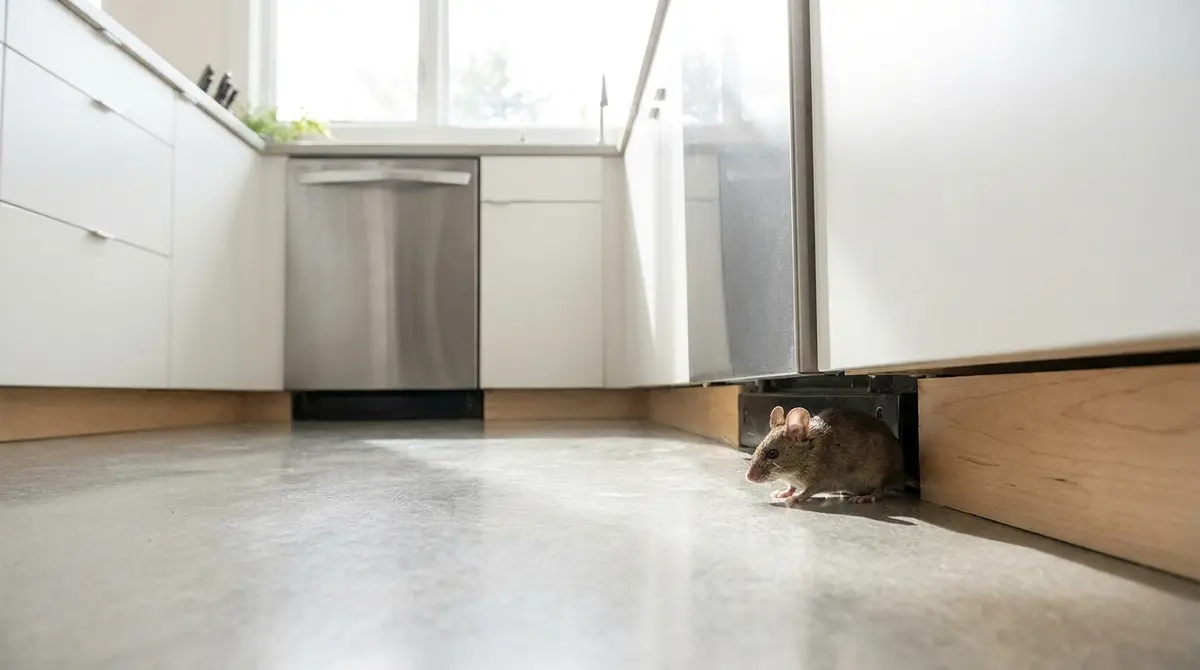
House mice in the pantry, deer mice in the attic: our own technicians inspect your home, trap and remove the mice, seal the entry points and clean up, so the mice leave and stay out. We serve homes across Issaquah, in ZIP codes 98027 and 98029. Call us and describe what you have seen.
House mice move indoors for food and shelter, and they stay once they find both. A pantry, a pet food bowl, a warm wall void: that is all a house mouse needs. Deer mice favour buildings near fields and forest, which is why forest-edge homes in Talus and on Squak Mountain see them more often. As the rain arrives in the fall, both species move indoors, and indoor calls peak from October to February.
Mice breed fast. A pair can become a dozen in a few months, and the nest stays hidden, in a wall, an attic or a crawl space, while the mice you see are only the ones out looking for food. That is why one mouse in the kitchen is rarely one mouse. The fix is the same for both species: remove the mice inside, then close the gaps so the next ones cannot follow. That is what Issaquah rodent control means to us, and mice control is where it starts for many Issaquah homes.
Left alone, mice chew wiring, wood and food packaging, and contaminate stored food and insulation with droppings and urine. Deer mouse droppings need the safe cleanup in the next section, because deer mice are the only rodents in Washington known to carry hantavirus. Trapping alone is not enough: the mice must be removed and the gaps sealed, in the same job.
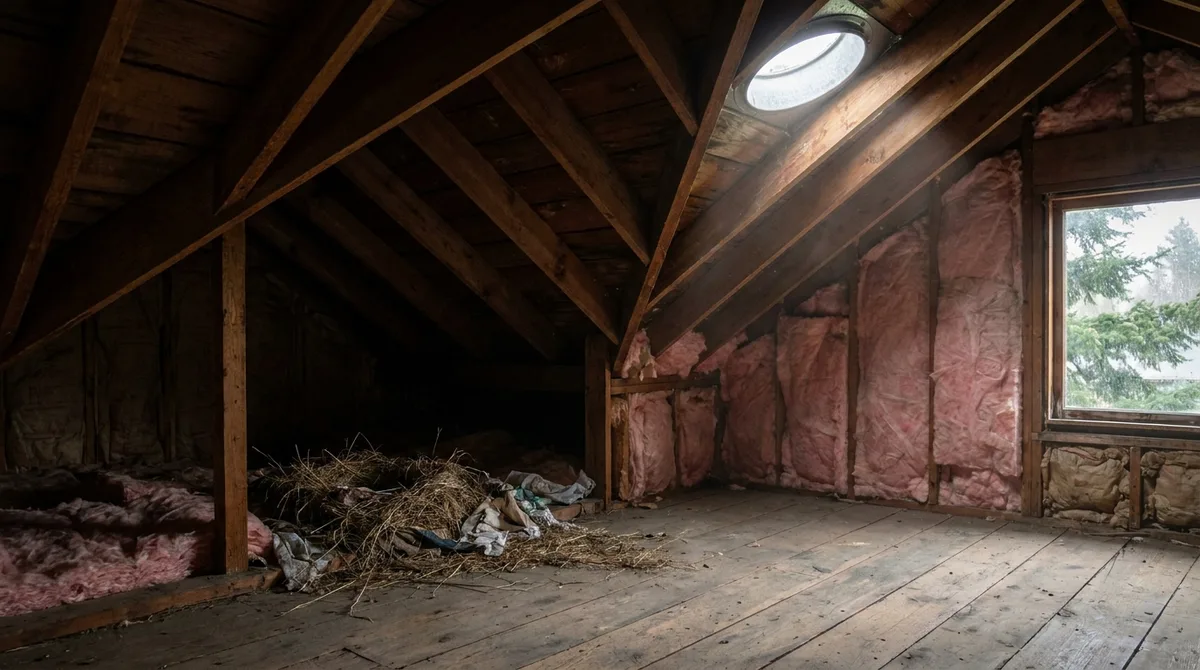
The two mice look alike at a glance, but they nest in different places, and deer mouse droppings need the safe cleanup below. This is what our technicians check on an inspection.
| What to look at | House mouse | Deer mouse |
|---|---|---|
| Size and build | Small, 2.5 to 3.5 inches long without the tail | Slightly larger, 3 to 4 inches, with a bicoloured tail |
| Colour | Grey-brown all over, paler underneath | Brown back, white belly, white feet |
| Ears and eyes | Small ears, small eyes | Large ears, large dark eyes |
| Tail | About as long as the body, plain | About as long as the body, dark above and white below |
| Droppings | About 1/8 to 1/4 inch, pointed at the ends | About 1/8 to 1/4 inch, pointed at the ends |
| Where it nests | Kitchens, pantries, wall voids, attics | Near fields and forest, in attics, garages and sheds |
| Health note | Contaminates food and insulation | Only rodent in Washington known to carry hantavirus |
Two or more signs usually mean a nest. Call and describe what you have seen, and we will tell you straight away whether it sounds like mice, and what to do next.
If you find droppings, do not sweep or vacuum them, and do not touch them with bare hands. Dry droppings can stir dust into the air, and deer mouse droppings need the safe cleanup below. This is the protocol our team follows, and the one we recommend for any droppings you find before we arrive.
A mouse fits through a gap a quarter inch wide, about the width of a pencil, and a gap that looks too small to matter is often the one they use. Forest-edge homes have more gaps than homes in open ground, and Issaquah has a lot of them. These are the gaps our technicians find most often on an inspection:
Fall is sealing season in Issaquah. The rain pushes mice indoors, and indoor calls peak from October to February, so the gaps found in the fall are the ones that matter most. Sealing them before the peak is what keeps a one-off visit from becoming a yearly problem. See rodent inspection and exclusion for how we find and seal every gap.
The attic, walls, kitchen and pantry are walked, droppings and nesting material are found, and every entry point is photographed.
Snap traps go on the mice routes inside the house. Traps are checked, emptied and reset until the activity stops.
Gaps a quarter inch and wider are sealed with steel mesh, sheet metal, mortar or copper mesh, so new mice cannot follow the old scent trails in.
Traps are checked and the seals looked at again to confirm the fix is holding and no new activity has started.
Day ranges are typical for a light infestation; a settled nest can take longer, and the inspection will tell you. Our own technicians do the work, and explain the plan in plain language before we begin. Rodent trapping and removal explains the trapping step in detail.
Mice control is not one tool. It is the right tool in the right place, and the wrong tool in the wrong place is what causes problems. This is how we work:
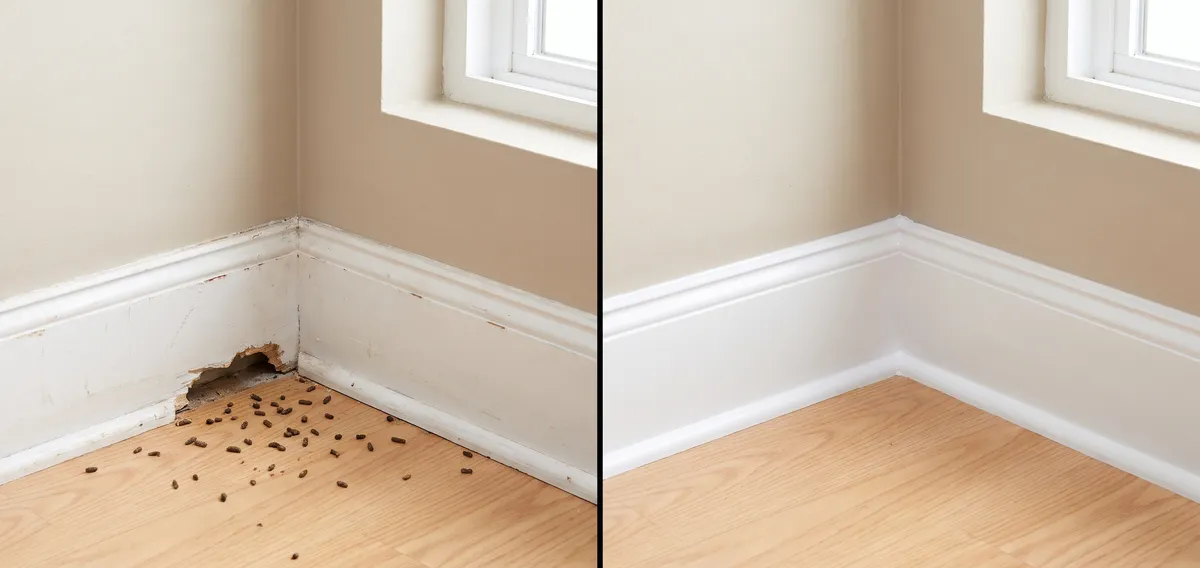
What mouse damage looks like on day one, and what is different when the job is done, in three places mice damage most often.
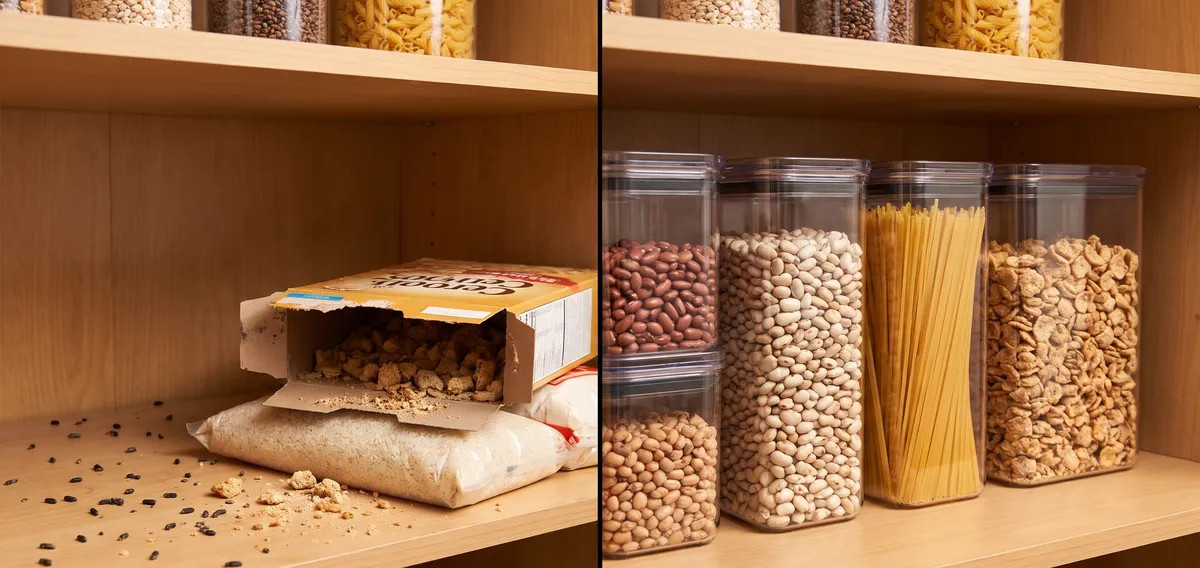 Before
After
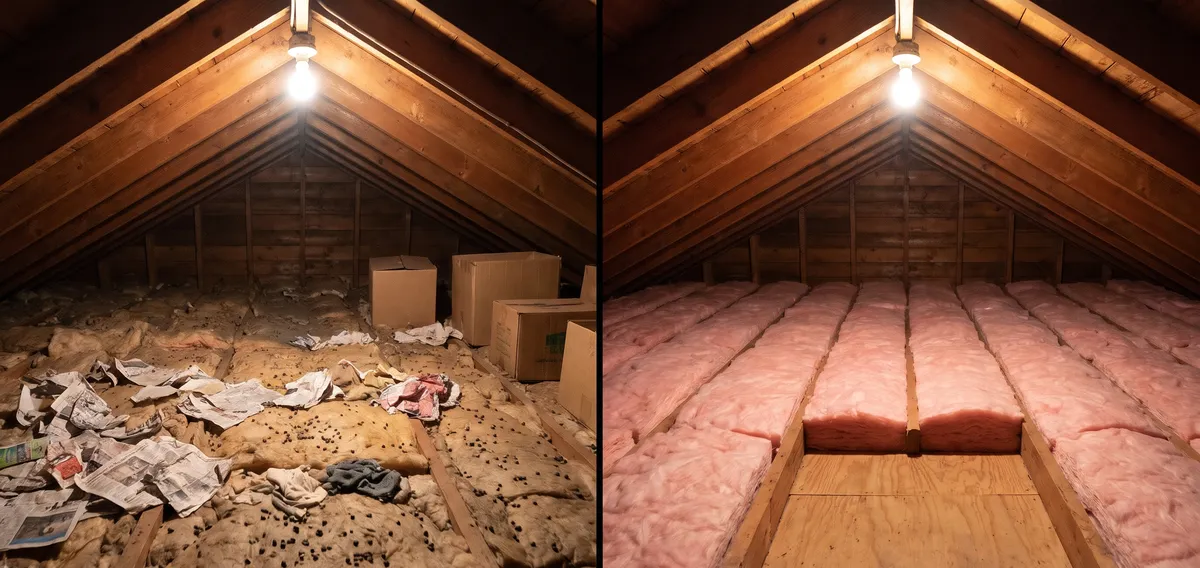 Before
After
 Before
After
These pairs show the kind of change a mice control visit makes. They are illustrative images, not photos of one single job: every home’s before and after looks different. The full job is attic and crawl space cleanup after inspection and exclusion.
A mouse in the pantry is not a job for a general pest spray. It takes the right identification, the right traps, and sealing that holds. That is what our rodent-only team does, and it is why Issaquah homeowners call us first.
House mice nest indoors, deer mice come in from the forest edge. We identify the species before we trap, so the traps go where that mouse actually travels, and deer mouse droppings get the safe cleanup.
A mouse fits through a gap a quarter inch wide. We seal with steel mesh, sheet metal, mortar and copper mesh. Never foam or plastic, so a mouse cannot chew its way back in.
No poison inside the house. Snap and live traps go inside, bait stations stay outside, where pets and children cannot reach them.
You get a plain plan of what we found, what we sealed, and what happens next. No vague promises, no jargon.
We work only in Issaquah. We know the forest-edge homes in Talus and on Squak Mountain, where deer mice come in, and the older homes downtown, where house mice find gaps.
We come back on Day 14 to check for new activity. If the mice are gone and the seals hold, the job is done.
Most mice jobs can wait a day. These three cannot. If any of these is happening in your home, call now and tell us.
A mouse seen in a kitchen, bedroom or living room means the animals are no longer staying in the walls or the attic. Keep children and pets out of the room and call us.
Droppings in a pantry, on a kitchen counter or near stored food mean the mice are reaching your food. Do not sweep dry droppings; call us and we will handle the cleanup safely.
Droppings from deer mice need the safe cleanup: air out, N95, gloves, bleach soak, wipe. If you are not sure which mouse left them, do not touch them and call us.
If a mouse is in a living space right now, see emergency rodent removal for what to do before we arrive. If you smell a dead animal in a wall, attic or crawl space, see dead rodent removal.
Trapping and sealing fix the mice you have now. These four habits keep new mice from moving in after we leave. Do them, and the next mouse has nowhere to go.
Mice control rarely ends with trapping. These are the services that usually go with it, on the same job or straight after.

Roof rats and Norway rats trapped, removed and sealed out.
View Details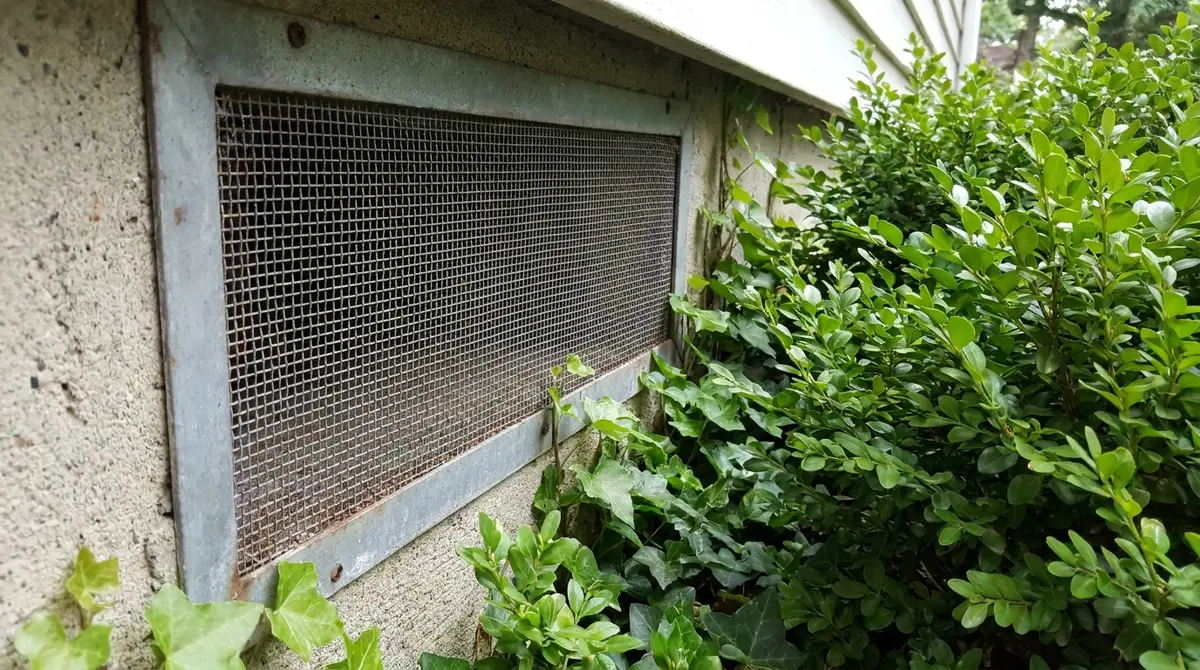
Walk the attic, crawl space and roofline; every gap found, then sealed with steel mesh.
View Details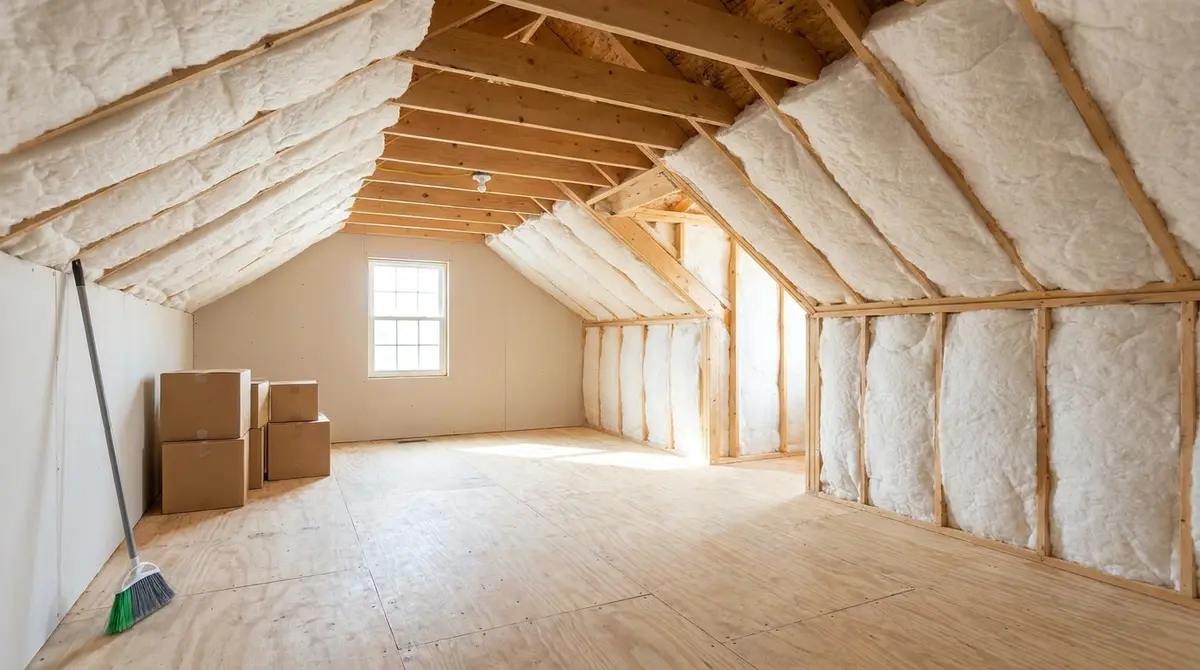
Droppings and damaged insulation removed, space sanitised and deodorised.
View DetailsThree guides that go deeper on the signs, the species, and the sealing. Read them before you call, or after, so you know what to look for.
Size, droppings, sounds and nests, so you know whether it is a mouse or a rat.
Read the Guide →Six signs to check, from droppings to scratching at night. Mice leave the same kinds of clues, smaller.
Read the Guide →What sealing means, the gaps we seal first, and what it does not do.
Read the Guide →Through gaps a quarter inch and wider, which is about the width of a pencil. Mice slip in around pipes and utility lines, through vents, under doors with worn seals, and through foundation gaps at ground level. A gap that looks too small to matter is often the one they use. That is why an inspection walks the whole house, inside and out, and why sealing is part of every mice control job.
Deer mice are the only rodents in Washington known to carry hantavirus, so their droppings need careful handling. Never sweep or vacuum dry droppings, because that can stir dust into the air. Air the room out for 30 minutes, wear an N95 respirator and gloves, soak the droppings with a bleach solution, then wipe them up. If you are not sure whether the droppings are from deer mice, call us and we will handle the cleanup safely.
No. Never sweep or vacuum dry droppings, whether they are from house mice or deer mice. Sweeping and vacuuming stir dust into the air. Air the room out for 30 minutes first, wear an N95 respirator and gloves, soak the droppings with a bleach solution, then wipe them up and put the waste in a sealed bag. Our team follows the same safe protocol on every cleanup.
Usually more than one. Mice breed fast, and a single mouse in the kitchen often means a nest nearby, in a wall, an attic or a crawl space. The number you see is not the number you have. An inspection finds the nesting sites and the entry points, so the trapping plan covers the whole population, not just the one mouse you saw.
By sealing the gaps they came through. Trapping removes the mice that are already inside, but new mice follow the same scent trails through the same holes. Every mice control job ends with sealing: gaps a quarter inch and wider are closed with steel mesh, sheet metal, mortar or copper mesh, and we check the seals again on a follow-up visit.
Our team brings mice control to every part of Issaquah, including Issaquah Highlands, Talus, Downtown Issaquah, Squak Mountain, Providence Point, South Lake Sammamish, Montreux and North Issaquah / Gilman. See all rodent control service areas in Issaquah.
“House mice in the kitchen every night. They set traps, found the gap behind the stove, sealed it, and the mice were gone within a week.”
Laura B.Downtown Issaquah
“We have a toddler, so we did not want poison in the house. They used traps only, sealed every gap, and explained how to keep mice out. It worked.”
Anna S.North Issaquah
“Deer mice in the garage. They cleaned it up safely, sealed the door gaps, and told us exactly what to watch for. No mice since.”
Chris D.Montreux
Call us and we will come to your home, anywhere in Issaquah. Tell us where you live and we will confirm straight away.
Our office: 1456 NW Mall St #4, Issaquah, WA 98027, USA · Get Directions
Tell us what you have seen or heard, and our team will come to your Issaquah home.
(425) 276-0252